“Broad-spectrum” can sound like a simple upgrade: more hemp compounds than CBD isolate, but no THC. That middle-ground pitch has helped the category appeal to shoppers who want a multi-compound extract without intentionally buying THC-containing CBD.
But does broad-spectrum CBD cost more to make? Often, it can usda organic CBD involve extra processing and testing. That does not mean every broad-spectrum product costs more at the store—or that a higher price proves a better product. The scraped article provided no product prices, so there is no price list to compare here. The most useful answer is about what manufacturers may have to do, and what shoppers can check before paying.
One more point matters: “THC-free” on a label is not, by itself, proof that a product contains no detectable THC. A batch-specific certificate of analysis, or COA, is the document to look for. A COA is a lab report for a particular batch; it can show what was tested and what the lab detected.
First, What Do Broad-Spectrum, Full-Spectrum and Isolate Mean?
These terms describe the kinds of hemp compounds a product is intended to contain. They do not tell you on their own how much CBD is in a serving, how carefully the product was tested, or whether the label’s claims are accurate.
Type What it generally means What to verify Full-spectrum Contains CBD and other hemp compounds, and may contain THC within applicable limits. Check the COA for the cannabinoid profile and the measured amount of THC. Broad-spectrum Contains CBD and may retain other hemp compounds, with THC removed or reduced to a stated testing limit. Look for the THC result, the lab’s reporting limit and a report matching the product’s batch. CBD isolate Primarily purified CBD, with most other hemp compounds removed. Check the CBD result and the report’s coverage of THC and contaminants.Definitions and manufacturing practices can vary between brands. “Broad-spectrum” does not guarantee that every product contains the same mix of minor cannabinoids or aromatic compounds. Nor does “isolate” mean a product has no ingredients besides CBD; oils, flavorings and other ingredients may be added after the extract is made.
Why Might Broad-Spectrum Cost More to Make?
To produce broad-spectrum extract, a manufacturer generally starts with hemp extract and separates or reduces THC while trying to keep some of the other desired compounds. That can mean additional hemp extract refinement beyond what is needed for a less-refined extract. The steps vary by company and product, and the label rarely describes the full process.
Common production stages may include extracting compounds from hemp, separating unwanted plant material, concentrating cannabinoids, and using further refinement to adjust the cannabinoid profile. A manufacturer making a THC-reduced extract may add a separation step, then test and possibly refine the material again if the results do not meet its target specification.
Those steps can add costs: equipment, trained staff, energy, time, material losses during processing and repeated quality checks. The yield may also change. For example, if a process removes THC but also removes some CBD or other compounds, a manufacturer may need to begin with more material to get the desired amount of finished extract.
That is a plausible cost pathway, not a universal price rule. Costs depend on the starting material, production scale, process efficiency, target specifications and the manufacturer’s quality system. A product’s retail price also includes more than extraction: packaging, shipping, marketing, retail margins and other business costs all play a part.
What the Missing Price List Means
The article being discussed lists no product prices. That is a real limitation, not a detail to fill in with guesses. Without prices, package sizes, CBD amounts per serving and comparable product types, it is not possible to say whether one brand’s broad-spectrum products cost more than its full-spectrum or isolate products.
Even when prices are available, compare like with like. A larger bottle may cost more but provide a lower cost per milligram of CBD. A useful comparison includes the total price, total CBD in the package, serving size and testing documentation. Price alone cannot tell you whether the THC claim is supported or whether the product is a good fit for you.
What Does the THC Removal Process Involve?
The THC removal process is not one single method used by every producer. Manufacturers may use different separation and refinement techniques to reduce THC, with the specific approach depending on the extract and desired finished profile. It would be unwise to assume that every “THC-free” label was produced in the same way—or that a label explains which steps were used.
Refinement can also affect more than THC. The manufacturer is trying to change the mix of compounds in an extract, and different processes can leave different profiles behind. A product described as broad-spectrum may retain some minor cannabinoids or aromatic plant compounds, but the label should not be treated as a guarantee of a particular formula unless the company documents it.
That is where lab testing CBD becomes important. Testing can help verify the finished product’s measured cannabinoid content and screen for specified contaminants. It cannot, by itself, explain the entire manufacturing process or prove that a product will have a particular effect for every person.
How to Read a Batch-Specific COA
A COA is only useful for your bottle if it corresponds to the product’s batch. “Batch-specific” means the report identifies a particular production lot, rather than offering a generic test result for a brand or product line.
- Match the batch number. Compare the lot or batch code on the package with the code on the report. If they do not match, ask the company for the correct COA. Check the product identity. The report should identify the product or sample tested clearly enough to connect it to what you bought. Find the cannabinoid results. Look for CBD and the forms of THC reported. A result marked “ND” means “not detected” under that test’s conditions; it does not necessarily mean the substance is absolutely absent. Look for the reporting limit. The report should make clear how little the lab could measure or report. “Not detected” is more informative when you know the method’s limit. Review the date and lab details. Check when the sample was tested and whether the report identifies the testing laboratory. If the company makes quality claims, ask whether the lab is accredited for the relevant testing. Check the scope. A cannabinoid panel is not necessarily a test for pesticides, heavy metals, solvents, microbes or other contaminants. Look for separate results if those checks matter to you.
A COA reports results for the sample submitted to the lab. It does not automatically prove that every bottle in a large production run is identical, and a report posted online should be checked against the batch in hand. If a brand claims “THC-free” but will not show a batch report with THC results and a reporting limit, treat the claim as unverified.
“THC-Free” and Drug Testing: A Necessary Caution
Broad-spectrum products are often marketed to people who want to avoid THC. That preference may reflect personal choice, workplace rules, athletic policies, legal concerns or a desire to avoid THC’s intoxicating effects. But a label claim should not be confused with a guarantee about drug-test results.
Drug tests generally look for THC-related markers, not for a product label. Testing outcomes can depend on the product, the amount and frequency used, individual factors and the testing method. Some products may contain trace THC, and mislabeling or contamination is possible. A test marked “not detected” also means the lab did not detect THC above its stated limit in the sample tested—not that every possible test will report a negative result.
If a positive result could affect employment, a license, competition eligibility or another important matter, the cautious option is not to rely on a “THC-free” claim as protection. Avoiding CBD products may be the only way to remove product-related uncertainty, though a person should seek qualified advice about their particular circumstances.
Why Broad-Spectrum Products Became More Familiar
The 2018 Farm Bill changed the federal treatment of hemp by removing hemp, as defined in the law, from the federal Controlled Substances Act. The definition includes a limit of no more than 0.3% delta-9 THC on a dry-weight basis. That change helped hemp-derived products become more visible in mainstream retail and online shopping.
It did not amount to a blanket approval of every CBD product or every health claim. Federal and state rules can differ, and product categories may be subject to other requirements. Shoppers still need to check the rules that apply where they live and be cautious about claims that a supplement treats or cures a condition.
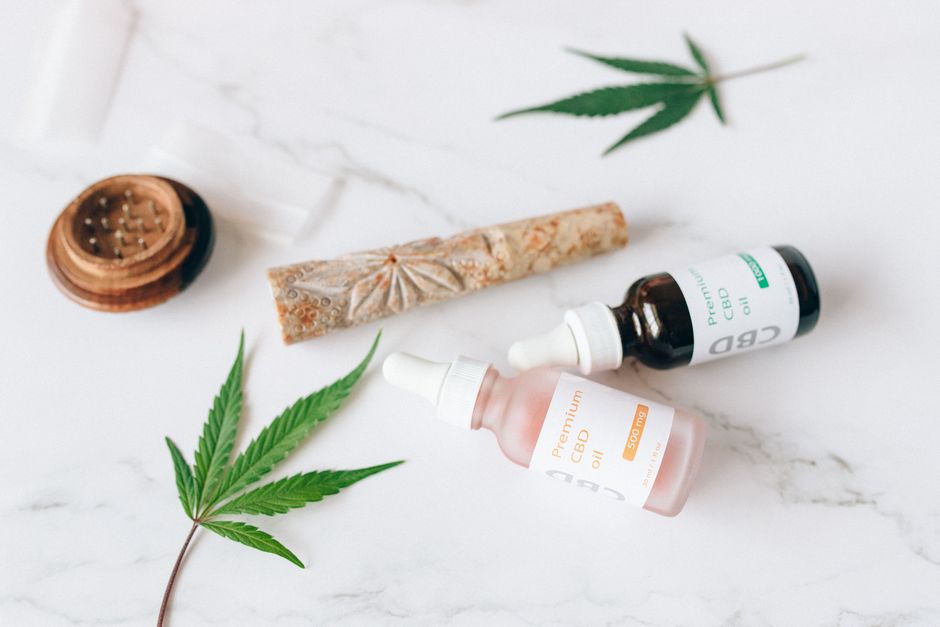
As CBD entered pharmacies, grocery-adjacent shops and wellness aisles, product labels began offering more choices: full-spectrum, broad-spectrum and isolate. The terms give shoppers a starting point, but they are not substitutes for clear ingredient information and reliable testing.
What Is the “Entourage Effect”?
The “entourage effect” is the idea that cannabinoids and other hemp compounds may influence one another’s effects when present together. In plain terms, it is a proposed “team effect,” rather than a claim that CBD works alone.
The idea is often used to explain why some shoppers prefer full- or broad-spectrum products to isolate. But the phrase is not proof that a multi-compound product works better for a specific condition. Research is still developing, and the presence of several compounds on a COA does not establish a clinical benefit. Treat the entourage effect as a hypothesis, not a settled promise.
A Practical Checklist Before You Buy
Decide what you are trying to avoid. If avoiding THC is important, remember that a broad-spectrum label is not a drug-test guarantee. Compare the amount of CBD. Check total milligrams per package and, if the serving is stated, milligrams per serving. Find the batch-specific COA. Match its batch number to the package and review the THC result and reporting limit. Check the rest of the testing. See whether the report covers contaminants relevant to the product and whether additional panels are available. Compare prices carefully. The referenced article lists no product prices, so it cannot establish a price difference. If you are comparing products, calculate cost per milligram of CBD and keep product type and size in view. Be skeptical of sweeping claims. “More refined,” “safer” and “works better” need specifics. A process description, a matching COA and clear labeling are more useful than a slogan.The Bottom Line
Broad-spectrum CBD can take more refinement than an extract that is not processed to reduce THC, and those extra steps can raise production costs. But the actual cost depends on the manufacturer’s methods, starting material, scale, testing and product specifications. Retail prices do not automatically track manufacturing costs—and the scraped article provides no prices to compare.
For shoppers, the practical question is less “Is broad-spectrum always more expensive?” and more “Can this company support what it says?” Ask for a batch-specific COA, check the THC result and its reporting limit, and remember that “not detected” is not the same as a guarantee of zero THC or a negative drug test. That is a steadier basis for a purchase than a premium-sounding label.